
Party Rental Insurance: 7 Questions to Ask Before You Book
The park, church or school wants a certificate of insurance before they sign off. Here's what that means, what to ask, and how to get the paperwork done without stress.
“The park said we need a certificate of insurance before they’ll sign off. What does that even mean?” We hear this every week, usually from someone planning a church festival, a school field day, an HOA event or a company picnic. The rentals are picked. The date is set. Then the venue sends an email with a line about insurance, and everything stops.
Here’s the good news. Party rental insurance paperwork sounds scary, but for most events it comes down to a few simple questions and one document from your rental company. This guide explains what venues usually mean when they ask about insurance, what to ask before you book, and how to keep the paperwork from holding up your event.
Family First has the most 5-star reviews in SWFL, with 900 Google reviews and counting.


Our experience comes from setting up and managing 7,000+ events | 19,500+ rentals!
We deliver, set up and pick up every rental ourselves, and we serve Lee and Collier counties, plus Babcock Ranch and parts of Punta Gorda. We’re licensed and insured, and a certificate of insurance is available upon booking. ¡Hablamos español!
Why Venues Ask About Party Rental Insurance
When you bring a bounce house, a tent or a rock wall onto someone else’s property, the owner wants to know who’s responsible if something goes wrong. That’s the whole reason behind the question. A park, a church, a school or an HOA is protecting itself, and that’s a smart thing for them to do.
Most of the time, the venue isn’t asking you, the host, to buy a policy. They’re asking for proof that the company bringing the equipment carries insurance. That proof usually comes as a certificate of insurance, often called a COI.
Who tends to ask:
- City and county parks. Pavilion and field reservations often come with vendor paperwork.
- Churches. Many have a facilities team or office manager who keeps vendor files.
- Schools and PTOs. Field days and carnivals usually go through a school office or district process.
- HOAs and property managers. Common areas belong to the whole community, so the board wants records.
- Event venues and businesses. Wedding venues, clubhouses and company properties often have their own vendor rules.
Every venue sets its own requirements. The only way to know yours is to ask them directly, in writing.
What a Certificate of Insurance Is
A certificate of insurance is a one- or two-page document that shows a business carries insurance. Think of it as a summary, not the policy itself. It tells the venue who the insured company is, who the insurance company is, and what kind of coverage is in place.
General liability insurance is the type most people mean when they talk about vendor or party rental insurance. If you want a plain-English explanation of how business insurance works, the U.S. Small Business Administration guide to business insurance is a solid place to start.
For you as the host, the main thing to know is simple: the certificate comes from the rental company, not from you. Your job is to find out exactly what your venue wants on it and pass that along early. At Family First, a certificate of insurance is available upon booking.
7 Questions to Ask Your Venue First
Before you book anything, send your venue contact a short email. Getting these answers up front is the easiest way to handle party rental insurance without last-minute stress:
- 1. Do you need a certificate of insurance from rental vendors? Some venues do, some don’t. Find out before you assume.
- 2. Who should the certificate be sent to? Get a name and an email address, not just “the office.”
- 3. Do you have specific wording or requirements? Some venues send a written list. Ask for it, and forward it to your rental company as is.
- 4. When do you need it? Ask for the deadline. Some offices want paperwork well before the event date.
- 5. Are certain rentals allowed or not allowed? A venue may be fine with a tent but have questions about a rock wall or a water slide. Ask about each item.
- 6. Where can equipment go? Ask where the rentals can be set up, and whether the area is grass or a hard surface.
- 7. Do you need anything from me, too? Some venues have their own permit, reservation or facility forms for the host. Those are separate from the rental company’s certificate.
Save the replies in one email thread. When you book, you’ll have everything in one spot.
How to Get a Certificate of Insurance From Your Rental Company
Once you know what the venue needs, getting the certificate is usually the easy part. Here’s how it works with us:
- Book your rentals. A certificate of insurance is available upon booking.
- Send us the venue’s requirements. Forward the venue’s email or written list as soon as you have it. Don’t retype it, just send what they sent you.
- Tell us who receives it. Give us the name and email of the person at the venue who needs the certificate.
- Confirm with the venue. Once they have it, ask your contact to reply that the paperwork is complete. That one email saves a lot of worry later.
The earlier you start, the smoother this goes. If your event needs board approval or a facilities sign-off, our HOA block party planning guide has a simple timeline that works for any event with a committee.
Why Bigger Rentals Get More Questions
Venues tend to ask more questions about bigger attractions. A rock wall, a mechanical bull, a big tent or a long obstacle course gets more attention than a few tables and chairs. That’s normal, and it’s easy to handle when you have the facts ready.
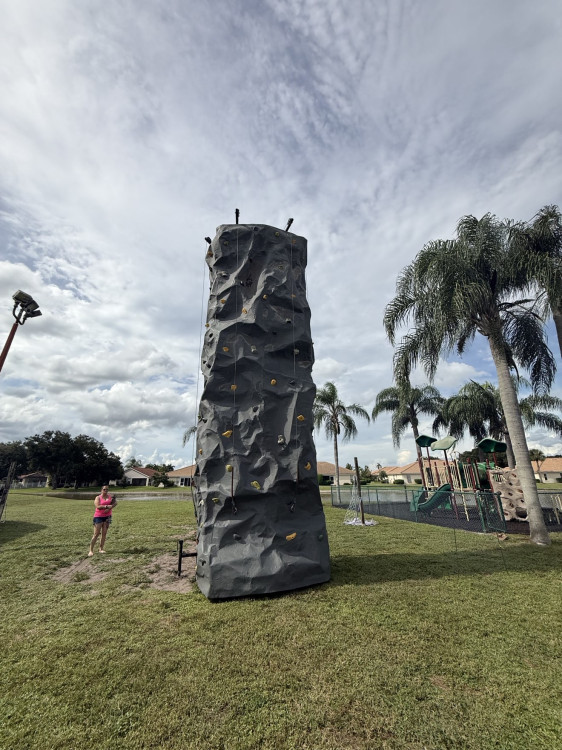
Our 24 FT Mobile Rockwall Rental (4 Climbers at Once) is a good example. It’s one of the most requested rentals for churches, schools and community events, and it comes with answers to the questions venues usually ask:
- Trained staff run it. Two trained attendants are included. They fit each harness, supervise every climb and operate the wall during your rental.
- Climbers come down safely. An automatic belay system gives each climber a smooth, controlled ride back to the ground.
- Four climbers at once. Four climbing lanes keep the line moving at busy events.
- No power needed. The wall is self-powered, so the venue doesn’t need to find an outlet for it.
- Clear rider limits. Climbers must weigh between 60 and 250 pounds.
- Clear weather rules. The wall can’t operate during lightning, heavy rain or winds over 20 MPH.
Facility managers like seeing that kind of detail. It shows them the attraction comes with a plan, not just a delivery. For more ways to use the wall, see our guide to rock wall rentals for church festivals.
Space and Setup Details Venues Want
Insurance is only one piece of venue paperwork. Facility managers also want to know where the equipment goes and how it gets there. Have these answers ready for the rock wall:
- Space needed. 50 feet long, 20 feet wide and 30 feet high.
- A path in. A path at least 10 feet wide and 10 feet high so the wall can get to the setup spot.
- Indoor use. The wall can be used indoors with at least 30 feet of ceiling clearance, because it’s built on a trailer.
- Setup time. About 30 minutes once it’s in place.
For inflatables and tents, the surface matters too. We stake into grass, and on hard surfaces we use sandbags for inflatables and water barrels for tents. If your venue has rules about staking, ask them early and tell us when you book. Our party rental space guide walks through measuring any site step by step.
Common Paperwork Mistakes to Avoid
Most insurance hold-ups aren’t about coverage at all. They’re about timing and communication. Here are the mistakes we see planners make most often with party rental insurance:
- Waiting until the week of the event. Offices close on weekends and holidays. Start early so a missing form doesn’t cost you the date.
- Guessing what the venue wants. Don’t assume. Ask for their requirements in writing and pass them along word for word.
- Sending it to the wrong person. The pastor, the principal and the facilities manager might all be involved. Find out who actually keeps the vendor file.
- Forgetting the host’s own forms. A park reservation or a school facility request is separate from the vendor’s certificate.
- Adding rentals late. If you add a big attraction after the venue signs off, check with them again.
Want a few more questions to ask before you book? Our rental contract questions cover what to get in writing from any rental company.
How to Check That a Rental Company Is Insured
Not every company that rents party equipment carries insurance. Before you book with anyone, ask a few simple questions:
- Are you licensed and insured? The answer should be a clear yes.
- Can you provide a certificate of insurance for my venue? A company that works with parks, churches and schools will know exactly what you mean.
- Who sets up and runs the equipment? Trained crews and attendants matter, especially for big attractions.
- What happens if the weather turns? A good company has clear weather rules and will tell you about them up front.
For school and church events, our setup guide for school and church events covers the rest of the planning, and our party safety tips help you keep the day running smoothly.
Plan Ahead for Weather, Too
Venues care about safety, and weather is part of safety. Southwest Florida storms can build fast in the afternoon. When you hear thunder, stop the activities and bring guests under cover. The National Weather Service lightning safety tips explain why that rule matters.
Share your weather plan with the venue along with your party rental insurance paperwork. It shows them you’ve thought it through, and it makes the day easier on everyone.
Party Rental Insurance Checklist
Screenshot this for your planning week.
- Ask your venue if they need a certificate of insurance from rental vendors.
- Get the name and email of the person who receives it.
- Ask for any specific requirements in writing.
- Ask for the paperwork deadline.
- Check which rentals and setup spots the venue allows.
- Book your rentals and forward the venue’s requirements right away.
- Fill out any host forms the venue needs from you.
- Get a written “all set” from the venue.
Party Rental Insurance FAQ
Do I need my own insurance to rent party equipment?
Usually the venue is asking for proof that the rental company is insured, not the host. Some venues also have their own forms or requirements for hosts, so ask your venue what they need from you.
Is Family First licensed and insured?
Yes. Family First is licensed and insured, and a certificate of insurance is available upon booking.
What should I send you for my venue’s certificate?
Forward the venue’s written requirements, plus the name and email of the person who should receive the certificate.
Who runs the rock wall at my event?
Two trained attendants are included. They fit each harness, supervise every climb and operate the wall during your rental.
Can the rock wall go indoors?
Yes, with at least 30 feet of ceiling clearance, because the wall is built on a trailer.
Get the Paperwork Done and Enjoy the Day
Party rental insurance doesn’t have to slow your event down. Ask your venue the right questions, get their requirements in writing, and send them to your rental company as soon as you book. Then you can get back to the fun part.
Tap below to add the rock wall to your quote, or browse our mobile rock wall rentals.
🎉 We Bring the Party to Your Neighborhood.